
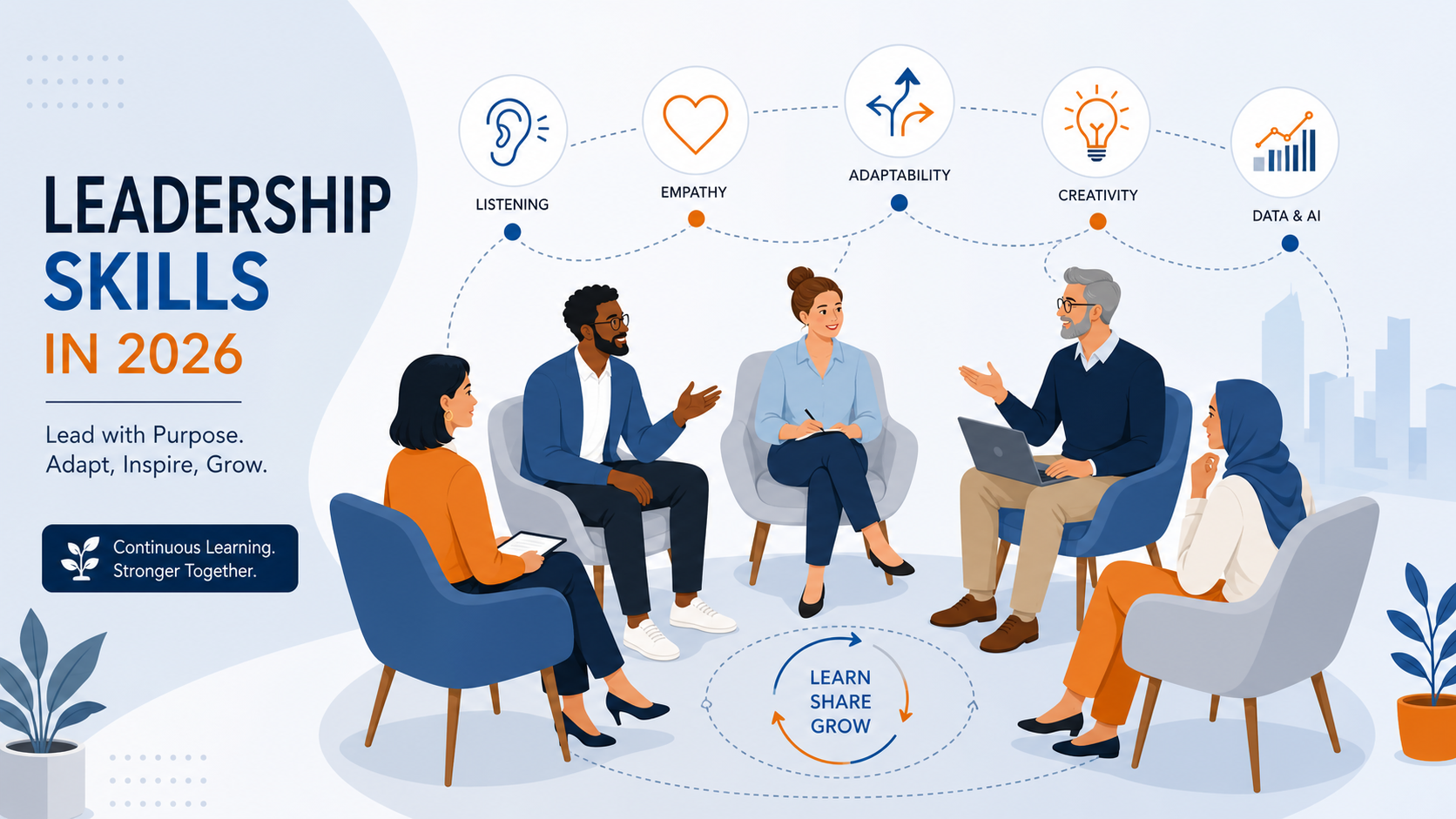
Technology advances rapidly, but human skills are what define who remains relevant in leading teams. Adaptability, emotional intelligence, and the ability to inspire without hierarchy are some of the keys to modern leadership.
From “Command and Control” to “Inspire and Empower”
In 2026, leadership is less hierarchical and more collaborative: it relies on influence, empathy, and creating environments where talent can fully develop. Organizations with flatter structures need leaders who can coordinate, facilitate, and connect, not just command.
Human skills like connection, clarity, curiosity, and creativity have become a competitive advantage in an environment where technology is accessible to all. What differentiates a high-performance team is how they relate, learn, and adapt.
Key Leadership Skills for This Decade
1. Building Relationships and Trust
Leaders who prioritize human connection over transactional control achieve more cohesive, committed, and resilient teams. This requires transparent communication, honest recognition, and the ability to show vulnerability when appropriate.
2. Adaptability and Continuous Learning
Reskilling has become a silent war between organizations: those who learn faster win. Adaptability means reviewing strategies, rethinking models, and learning from mistakes without clinging to rigid structures.
3. Emotional Intelligence and Resilience
Resilience and emotional intelligence are essential for leading in uncertainty, sustaining performance, and protecting your own and your team’s mental health. A leader who doesn’t manage their emotions can hardly support others in high-pressure contexts.
4. Leadership as Influence and Coaching
Modern leadership is understood as the ability to inspire, empower, support, and train others, rather than formal authority. Dedicating time to team development and constructive feedback is one of the highest long-term return investments.
How to Start Developing These Skills
• Choose one key skill (e.g., active listening) and practice it intentionally in every meeting: speak less, ask more, and summarize what you hear.
• Ask your team for specific feedback on your leadership style: what helps them, what limits them, and what they’d like to see more of.
• Allocate weekly agenda time for learning: courses, readings, mentoring, or reflection spaces on your decisions and emotions as a leader.
Leaders who combine these skills with an intelligent understanding of technology will build bolder teams, open to learning, and aligned when it truly matters.