
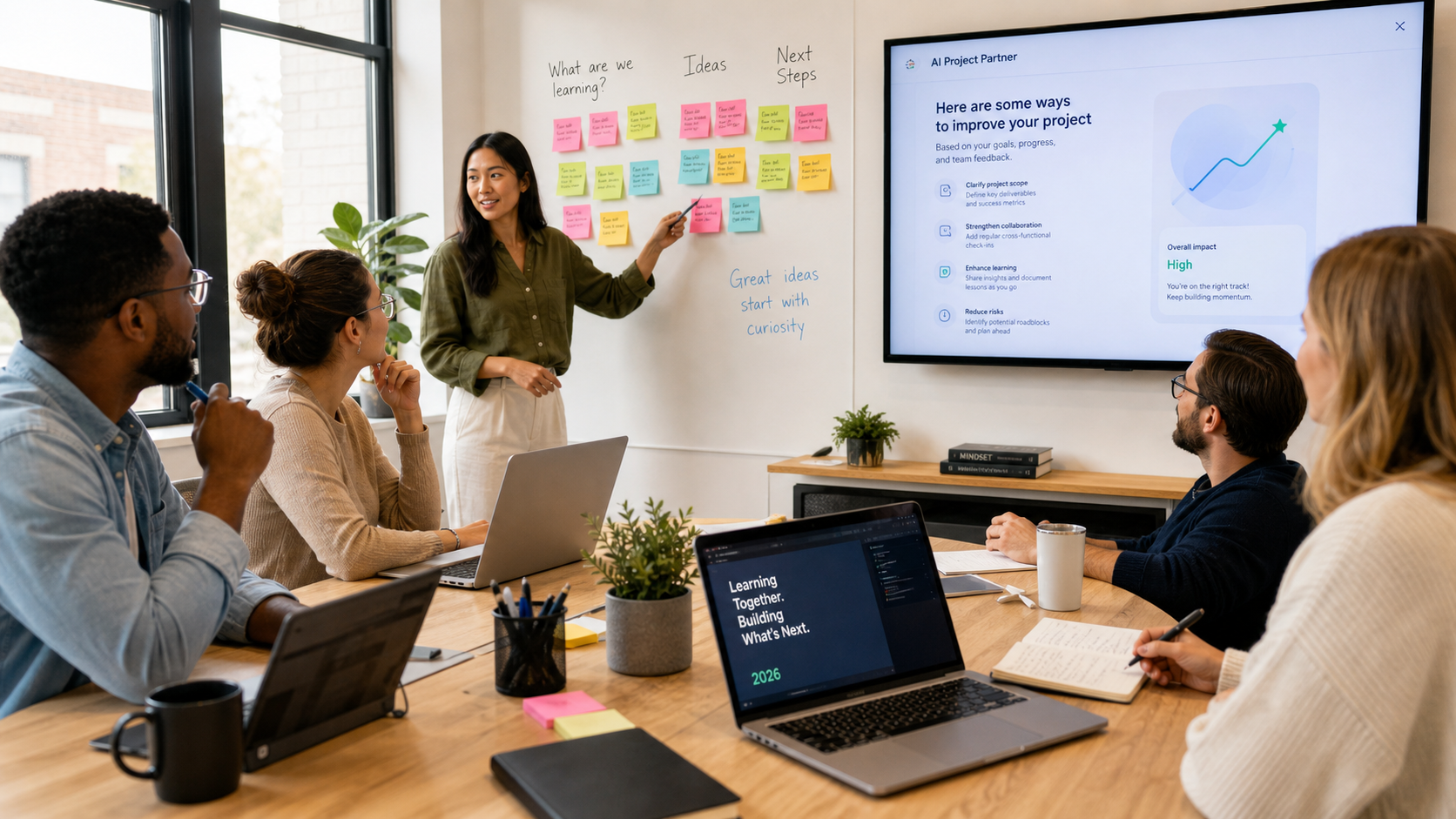
In 2026, learning is no longer a one‑off course once a year, but part of everyday work. Leaders who understand this design teams where learning and delivering results happen at the same time.
Reskilling stopped being a “perk”: it is now strategy
Multiple sources agree that upskilling and reskilling are no longer a “nice‑to‑have”, but a condition for staying relevant. The combination of new technologies, hybrid models and volatile markets makes knowledge obsolete faster than ever.
Organizations that bet on continuous learning within the flow of work retain talent better and adapt more quickly to change. For you as a leader, this means stopping seeing training as an event (a workshop, a course) and starting to see it as a system.
How to design learning into the team’s day‑to‑day
Some concrete practices to bring learning into real work:
- Micro retrospectives every week
Short check‑ins where the team answers three questions: What did we try this week? What did we learn? What will we adjust next week? This keeps the learning cycle alive without adding a big time burden. - Learning pairs
Pair someone with experience in an area with someone who wants to develop it. They can spend 30 minutes a week reviewing a real case, a project or a recent mistake. - Project challenges with AI as a guide
Use AI tools to propose improvements, alternatives or scenarios; the key is to discuss as a team the “why yes” and the “why not”, training judgment and critical thinking. - Document what you learn
Do not only celebrate the outcome: capture the process. Create an internal wiki, a shared folder or a board with short, reusable “lessons learned”.
Your role as leader: skills coach, not just task manager
The World Economic Forum and other organizations agree that skills such as analytical thinking, emotional intelligence and project leadership are the basis of performance in 2026. Your role is no longer just to assign tasks, but to help your team develop these capabilities while they use them.
Questions you can bring into your conversations:
- What skill are you developing with this project?
- What would you like to try differently next time?
- What support do you need to learn faster?
When the team feels that every project is also a growth opportunity, engagement and quality of results shift to another level.