
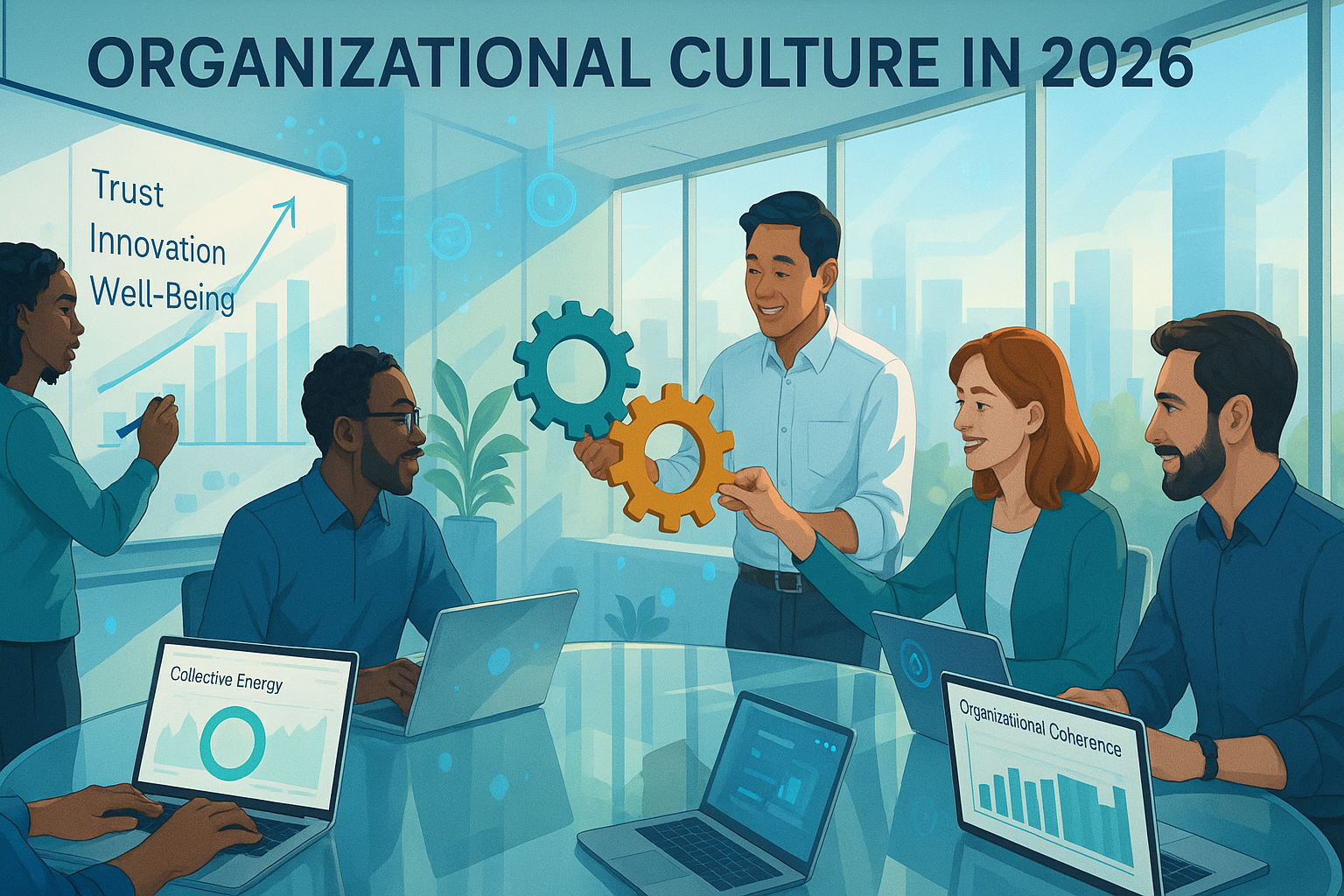
Facing 2026, organizations confront a crucial turning point. Efficient processes, competitive salaries, or cutting-edge technology are no longer enough. The companies that will thrive are those that treat organizational culture as a strategic asset, not as an isolated project or a values document hanging on the wall.
Culture as the Corporate Operating System
The organizational culture of the future has ceased to be an isolated area and has become the company’s operating system. It defines:
• How strategic decisions are made
• How conflicts are resolved constructively
• How leadership is exercised with purpose and coherence
• How talent is recognized equitably
• How continuous innovation is fostered
• How commitment is maintained during crises
Organizations investing in measuring, managing, and evolving it continuously ensure more productive, engaged teams ready for future challenges.
Seven Trends Transforming Culture in 2026
- Conscious and Regenerative Leadership
Leaders are evaluated not just by individual results, but by elevating system-wide awareness. Regenerative leadership integrates emotional regulation into daily routines, handles tough conversations with presence, and makes reflective decisions. - Data-Based Culture: Rise of Invisible KPIs
New metrics include organizational coherence index, collective energy, productive conversations, learning cycles, and team emotional maturity. Non-measuring organizations operate blindly. - Deep Well-Being as Sustainable Performance Base
Beyond symbolic programs: balanced workloads, human performance management, real breaks, disconnection policies, and protective environments for mental health. - Diversity and Inclusion as Innovation Engines
Multidisciplinary teams with diverse perspectives and inclusive structures eliminate barriers, promote equity, and ensure every voice contributes. - Continuous Learning and Self-Management Culture
94% of companies see continuous learning as key to competitiveness. Bet on self-deciding teams, flexible roles, clear agreements, and reflection processes. - Technological Integration with Humanity
Balance AI efficiency with human empathy, creativity, and critical thinking. Leaders must stay updated without losing the human factor. - Lived Values, Not Declared
People imitate actions, not declarations. Aligned leaders and behavior-focused recognition build solid cultures.
How to Work Your Organizational Culture in 2026
1. Treat it as strategic asset: Invest, measure, evolve continuously
2. Live values authentically: Refresh, activate, behavior-specific
3. Align leadership top-down: Committed executives build culture
4. Recognize desired behaviors: Stronger than any campaign
5. Integrate deep well-being: Real sustainability policies
6. Foster shared growth culture: Continuous learning responsibility
Conclusion: Culture as Competitive Advantage
Rigid, change-resistant organizations risk obsolescence. In talent-driven markets, culture is the solidest competitive edge.
Future belongs to those that integrate, learn, and regenerate best. Is your organization ready?